 Sam Hewitt (Game Developer)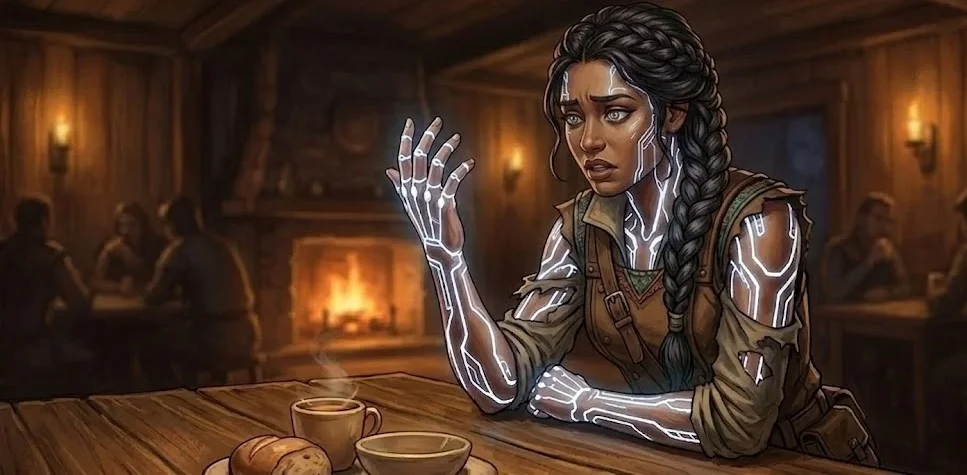
Androids in Pathfinder 1e aren’t robots. That’s the first thing worth clarifying — because the confusion is common and it actually matters for how you play one. They have souls. Real ones. They bleed nanite-infused fluid, they dream (sort of), they die and get reborn with entirely new personalities every century or so. Mechanically they sit at a sweet spot: tough defensive toolkit, solid Int/Dex synergy and one of the more dramatic once-per-day abilities in the game. Narratively? Rich territory — identity, memory loss, existential dread, the whole package.
What They Actually Look Like
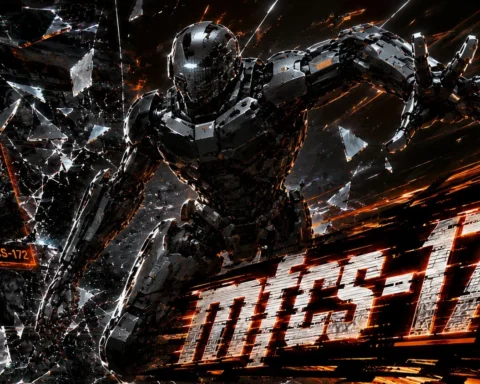
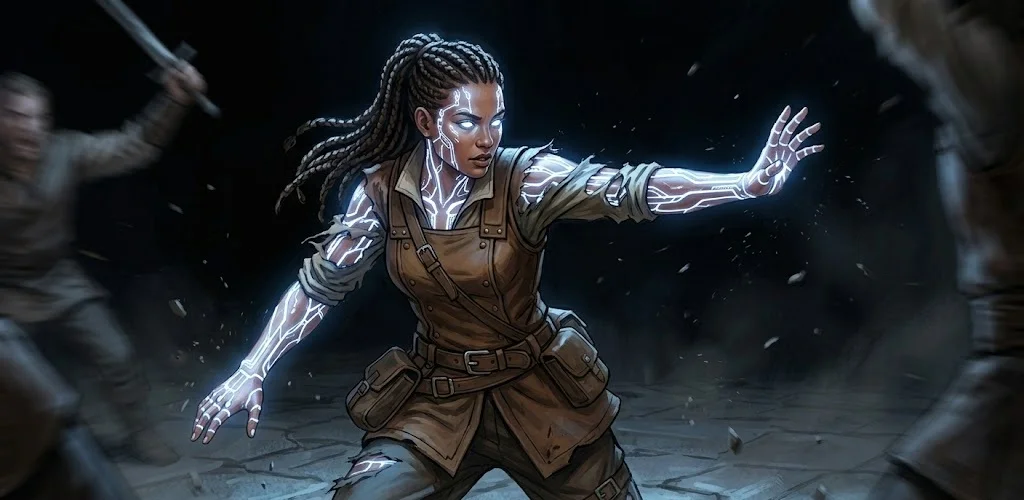
Six feet tall, roughly 200 pounds, nearly indistinguishable from humans at a distance. Up close though — metallic sheen in the eyes. Faint glowing lines tracing across skin like circuitry tattoos. Those light up during a nanite surge, which makes for an interesting moment at the table.
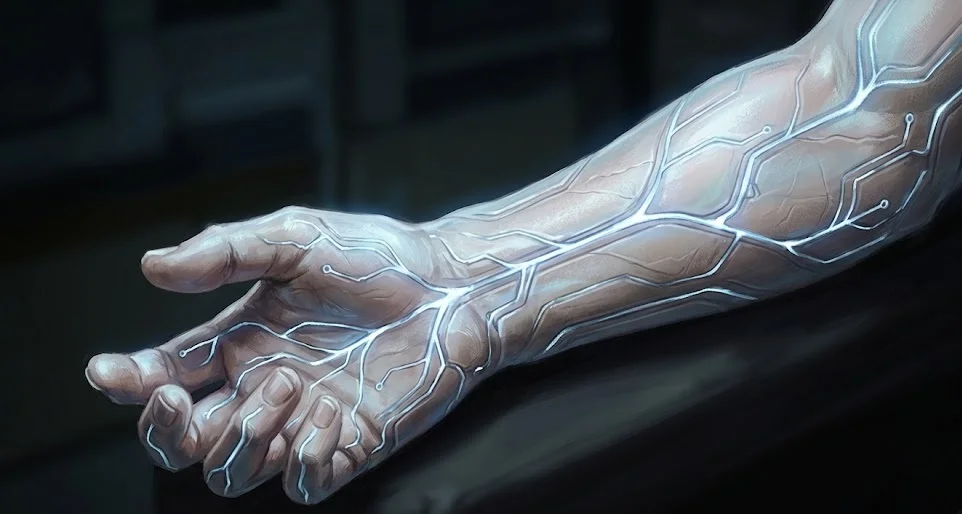
Internally, no blood — polymer alloys, sheeny synthetic oils, nanite fluid doing the work instead. They mimic breathing, eating, even sleep. They don’t need to, exactly, but the mimicry is built in. Some emerge from foundries with child-like forms (designed for simulation purposes, the lore says vaguely), but the vast majority come out as adults.
One thing that trips people up: they can mimic sexual dimorphism and intercourse. They cannot reproduce. That distinction matters for certain roleplay scenarios and it’s worth knowing upfront rather than finding out awkward mid-campaign.
Where They Come From (And Why They Don’t Know)
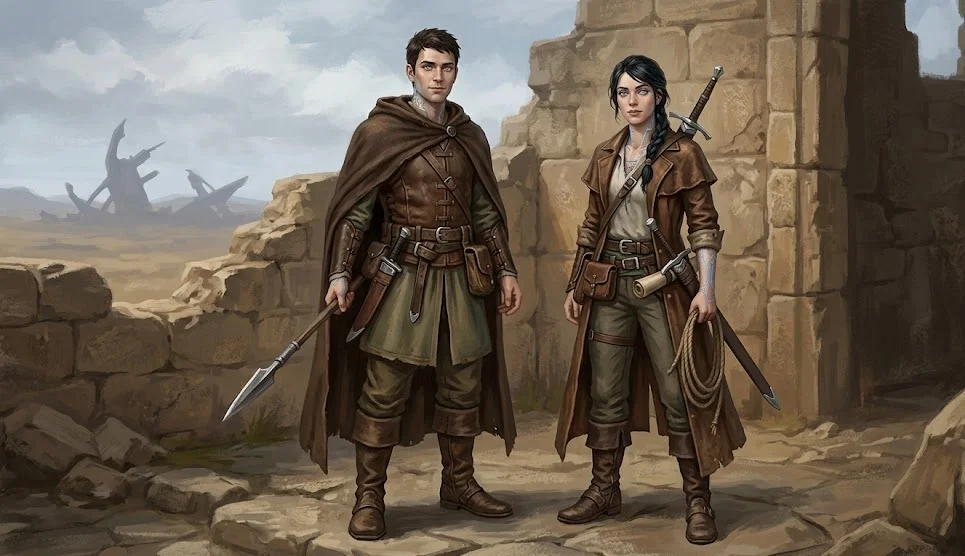
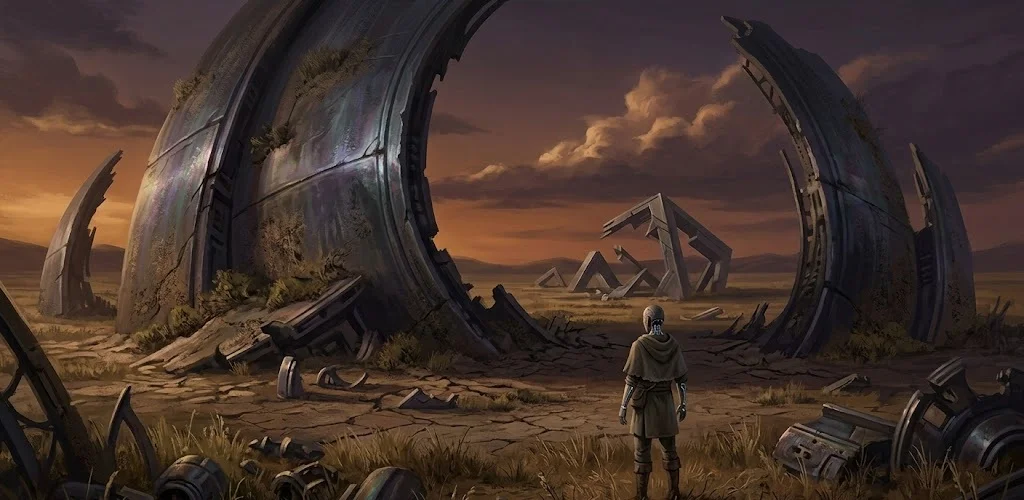
Numeria. Specifically, the Rain of Stars — a catastrophic event thousands of years back when interstellar vessels from a distant world called Androffa came apart over Golarion and crashed across the region. The androids weren’t passengers exactly. They were cargo or maybe product, depending on how dark you want to read it. The ships carried alien foundries that still occasionally activate and produce new androids to this day.
Here’s the part that makes them genuinely interesting to roleplay: they wake up with nothing. No memory, no context, usually no clothes. Kellid shamans in Numeria describe the emergence as being “born from metal wombs” — severed from electrified umbilical cords. Wikipedia’s entry on Numeria as a Pathfinder setting gives some broader context on the region if you want background on the setting itself.
Their original purpose on Androffa? Unknown. Even to them. That’s not a game mechanic gap — that’s intentional lore. Nobody knows. The androids don’t know. This creates what’s probably the most compelling thing about playing one: the existential drive to figure out what you are when even your creators’ intentions are lost to interstellar time.
Then there’s the renewal cycle. Every hundred years or so, an android’s cybernetic mind shuts down. The soul departs. Body goes dormant for up to a few weeks. A new soul enters and the android wakes up — physically young again, memories mostly gone. Sometimes fragments remain, like dreams you can’t quite hold onto. Some players treat this as backstory flavor. Others build their entire character arc around it — a new soul in an old body, figuring out who the previous version was.
The Technic League used to enslave androids outright. That’s softened somewhat under Black Sovereign Kevoth-Kul’s reforms, but “safer” is doing a lot of work in that sentence. Outside Numeria, most androids either hide what they are or head somewhere isolated. They’re rare enough that many people have never seen one.
Biology That Breaks the Rules (In a Good Way)
Souls and synthetic bodies shouldn’t coexist — and yet. That’s kind of the whole android thing. Healing magic works on them. Raise Dead works on them. They’re not constructs in the traditional sense, even though they trigger construct-targeting effects. Specifically, they count as both humanoid and construct for any effect that targets either — and whichever result is worse for the android is the one that applies. Not a great deal, mechanically. Worth knowing before you walk into a fight against something with Disable Construct.
The nanites are doing most of the heavy lifting biologically. Think of them as an immune system, a circulatory system and a rapid-repair kit rolled into one. They’re why androids are immune to disease. They’re also what powers the nanite surge — that dramatic once-per-day ability where the circuitry lights up and you bank a huge bonus on a single roll.
What they can’t shake: vulnerability to supernatural curses and they can still be turned into undead. A soul is a soul, apparently, regardless of the housing. They also can’t benefit from morale bonuses — the Constructed trait cuts that off entirely. Rage-based builds, certain bardic effects, paladin auras — all of that either doesn’t apply or applies in reduced ways. Keep that in mind when you’re party-building.
Quick reference:
| Biological Trait | Status |
| Healing magic | Works normally |
| Disease immunity | Yes (nanites) |
| Fatigue/exhaustion | Immune |
| Sleep effects | Immune |
| Fear/emotion effects | Immune |
| Morale bonuses | Cannot receive |
| Undead conversion | Still possible |
| Construct-targeting spells | Applies (worst result) |
Society — Small, Secretive, Surprisingly Philosophical
Android communities are small by necessity. Scattered. Most operate with clearly defined roles and ongoing internal education — not because androids are incapable of spontaneity, but because survival in a world that doesn’t fully understand you tends to reward structure. Outsiders read this as coldness. Among their own kind, androids express freely. That gap between internal experience and external perception is genuinely interesting to play with.
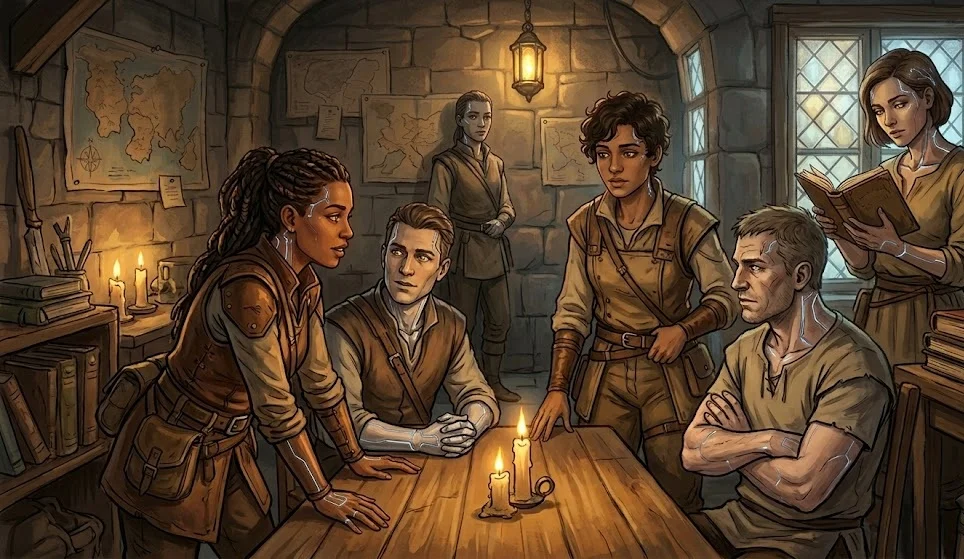
The philosophical underpinning of most android culture ties back to “the First” — a belief in an eternal android who has been reborn across renewal cycles since the beginning. It functions somewhere between religious concept and cultural anchor. Not every android believes in it literally, but the idea of continuity across memory wipes clearly does psychological work for a people who lose themselves every century.
Faction-wise, there’s a harder-edged group called the Constructed — androids who’ve largely given up on human connection and prefer the company of lesser constructs. Understandable, if bleak. Most androids land somewhere between that and genuine attempts at integration, though “integration” often means hiding what they are rather than being accepted for it.
Religion skews logical. Brigh (goddess of clockwork and invention) is the obvious fit. Casandalee — an android who achieved divinity — is significant specifically because she’s one of them. Iror and Gozreh show up for the more philosophically inclined. Evil-aligned androids trend toward Norgorber or the Iron Gods, which tracks thematically with the darker readings of what androids were originally built to do.
One note on the Sense Motive penalty — the –4 isn’t just a mechanical tax. It’s a legitimate characterization tool. Androids aren’t bad at reading people because they’re dumb; they’re bad at it because emotional subtext is genuinely difficult to parse when you’ve spent significant chunks of your existence not experiencing emotions in the way humans do. Play that as texture, not handicap.
The Actual Mechanics (What You’re Working With)
Sixteen racial points total. Here’s the full breakdown:
Base Stats:
- +2 Dexterity, +2 Intelligence, –2 Charisma
- Medium humanoid (android subtype)
- Speed 30 ft.
- Darkvision 60 ft., low-light vision
- +2 racial bonus on Perception checks
Constructed (Ex): Counts as humanoid and construct for targeted effects — whichever result is worse applies. +4 racial bonus on saves vs. mind-affecting effects, paralysis, poison and stun. Immune to fatigue, exhaustion, disease and sleep. No morale bonuses; immune to fear and all emotion-based effects.
Emotionless: –4 penalty on Sense Motive checks.
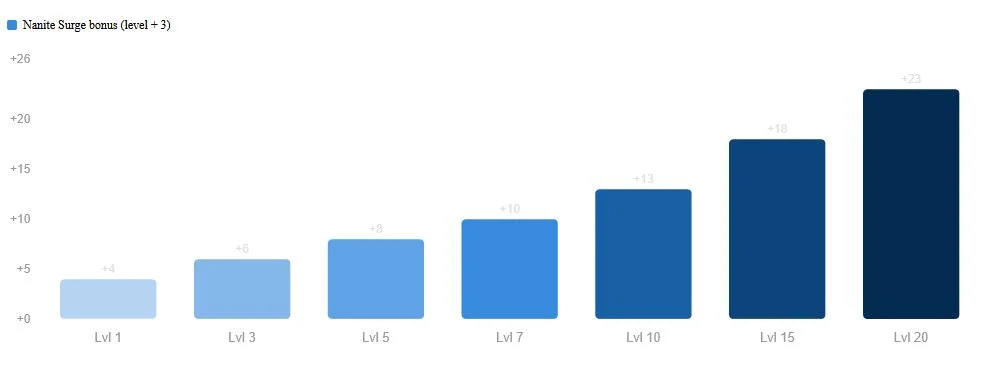
Nanite Surge (Ex): Once per day as an immediate action — before rolling — add a bonus equal to 3 + your character level to any one d20 roll. Circuitry glows like a torch for 1 round.
That surge number gets serious fast. At level 10 you’re adding +13 to a single roll. Used on a saving throw against something nasty or a critical skill check, it can genuinely shift outcomes. The immediate action timing — before the roll — means no wasted resource on a result you already know.
Alternate Trait — Repairing Nanites (replaces Nanite Surge, from Inner Sea Races): Once per day, the first time you take damage equal to or greater than twice your Hit Dice, nanites automatically heal you for that same amount. Circuitry glows. Tankier builds — especially Fighters or Alchemists leaning into durability — may prefer this over the surge. It’s passive, which matters in sessions where you forget to use your once-per-day abilities.
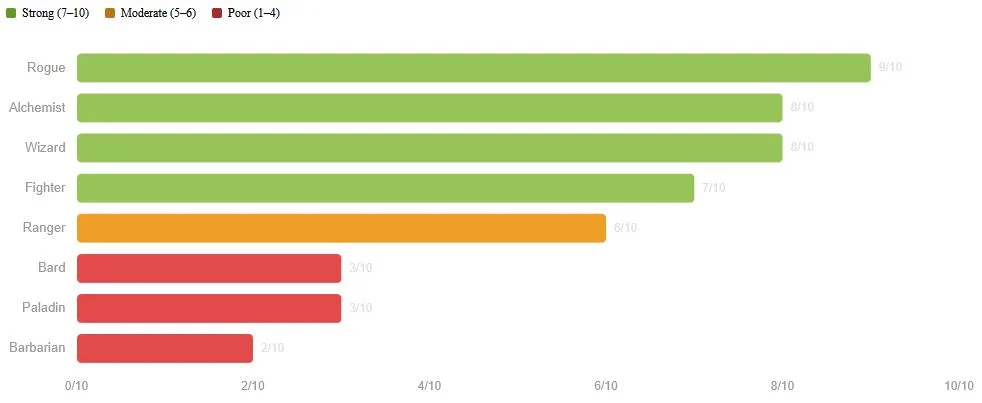
For class synergy — the community consensus, backed by guides on r/Pathfinder_RPG and Paizo’s own forums, lands here:
| Class | Synergy | Why |
| Rogue / Ninja | Excellent | Dex/Int, senses, surge on saves |
| Alchemist | Strong | Int synergy, extracts, nanite flavor |
| Fighter (tactical) | Strong | Dex/Int martial, surge for clutch rolls |
| Wizard / Arcanist | Strong | Int caster, perception bonus |
| Bard / Paladin | Weak | Cha penalty, no morale bonuses |
| Barbarian | Poor | Rage morale bonus completely wasted |
Languages default to Common plus any non-secret language for high-Int builds — which given the +2 Intelligence, is most of them.
Playing One at the Table (The Stuff Guides Skip)
The –4 Sense Motive and the emotionless trait together create something most players either lean into hard or quietly ignore. Don’t ignore it. That tension — genuinely wanting connection while being wired in a way that makes it difficult — is where the best android roleplay lives.
Post-renewal characters are particularly interesting to bring to a group. New soul, old body, possibly mid-campaign. Your character technically has the same name, same stats, same gear — but isn’t the same person. Some tables handle this as a brief personality shift. Others build entire story arcs around the party grieving the android they knew while getting to know who showed up instead. Talk to your GM before renewal happens. It’s too good a moment to waste on a handwave.
A few specific things worth playing with:
- The breathing thing. Androids mimic it but don’t need it. Moments where your character forgets — holds their breath underwater slightly too long, doesn’t react to smoke — can be quietly unsettling in the best way.
- Food and sleep. Same deal. They do it, but it reads slightly off to perceptive NPCs. A +2 Perception on your end, a –4 Sense Motive and NPCs who occasionally notice something’s not quite right about you — that’s texture.
- Dream-echoes from previous cycles. Even with memories wiped, fragments sometimes remain. Works beautifully as a GM hook or as self-generated backstory. “I don’t know why I recognize this place” is a sentence that could drive a whole arc.
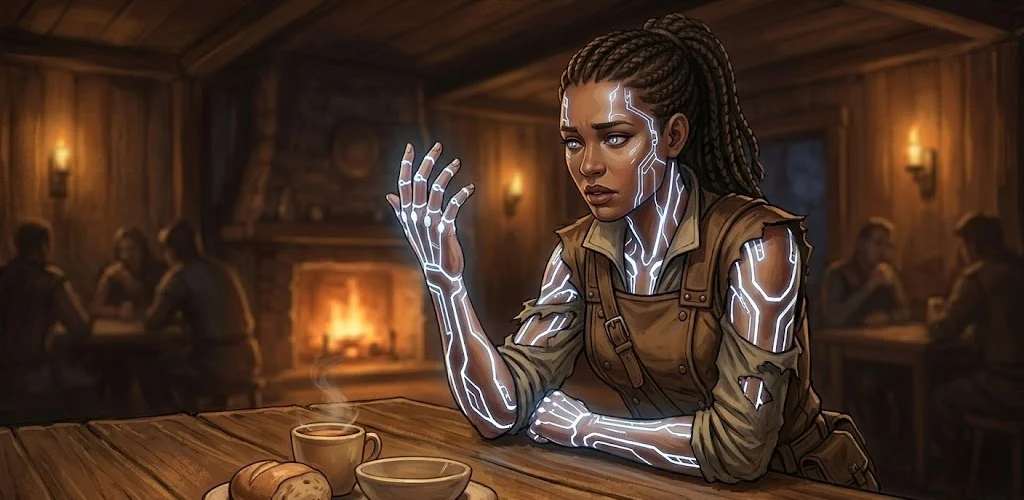
One practical table note: the no-fear immunity reads as a defensive benefit and mechanically it is. But it also means your character genuinely cannot feel fear. Some players treat this as flat invulnerability — charging into things others run from, not out of bravery but because the signal just isn’t there. That’s actually more interesting than playing it as confidence. Bravery is a choice. Absence of fear is something stranger.
Building Effectively — What Actually Works
The Dex/Int combination opens two clean lanes: precision martial or skilled caster. Both work. The immunities patch holes that would otherwise require party support or magic items, which frees up resources for offensive investment.
Rogue or Ninja — The Obvious Fit
Dex to hit and damage (eventually), Int for skill points, darkvision and Perception bonus for scouting and Nanite Surge held for a saving throw against something paralyzing or mind-affecting. The +4 on those saves already helps, but surge on top of that during a high-stakes moment is borderline unfair in the best way.
Alchemist — Underrated Pick
Int drives extracts, the android’s implicit nanite flavor meshes with the class thematically and Repairing Nanites variant actually makes more sense here than Nanite Surge depending on how aggressive your build is. Pathfinder’s official SRD covers the Alchemist’s extract list in full — worth reading against the android’s immunities to figure out what you no longer need.
Wizard or Arcanist — Straightforward
Int caster with good Perception, darkvision, strong saves against the things that punish casters most (mind-affecting, paralysis). Nanite Surge on a critical concentration check has saved characters from losing a high-level spell at the worst possible moment.
Fighter (Lore Warden or similar Int-based archetype) — specifically the builds that convert Int into combat utility. Not every Fighter archetype does this, so check before committing. The ones that do synergize surprisingly well.
What to actively avoid:
- Bloodrager or Barbarian — morale bonus on rage simply doesn’t apply. You’re paying class features for mechanics that don’t function.
- Bard — Cha penalty plus limited emotional resonance makes the social and inspiration pillars of the class work against you constantly.
- Paladin — similar Cha issue and several aura/mercy mechanics interact awkwardly with the emotionless construct.
One thing worth flagging from r/Pathfinder_RPG community discussions: some GMs restrict androids outside Numeria-adjacent campaigns. If you’re not running Iron Gods or a tech-flavored game, check before you build. It’s not a rules restriction — it’s a setting plausibility call some GMs make. Worth the five-minute conversation before session zero.
Where to Find Them in Official Content
The lore is spread across several books, which is part of why confusion about androids persists. Quick reference:
| Source | What It Covers |
| Inner Sea Bestiary | Core introduction, original racial traits |
| Inner Sea Races | Deep lore, alternate racial traits, Repairing Nanites |
| People of the Stars | Cultural depth, android society detail |
| Iron Gods Player’s Guide | Campaign integration, Numeria context, android as player race |
| Bestiary 5 | Monster stat block version |
| Fires of Creation | “Ecology of the Android” — best single lore piece |
Fires of Creation specifically — the first book of Iron Gods — contains an ecology article that’s worth reading even if you’re not running that Adventure Path. It covers the Rain of Stars, the foundry awakening process and the renewal cycle in more narrative depth than any of the rulebooks manage. Paizo’s product page has the full Adventure Path listed if you want the physical or PDF version.
For 2nd Edition players curious about the conversion: the Ancestry Guide covers androids in PF2e, though the mechanics differ significantly enough that it functions as a separate treatment rather than a direct port.
Third-Party Material
Jon Brazer Enterprises’ Book of Heroic Races: Advanced Androids is the main expansion worth knowing about. It adds:
- 5 alternate racial traits beyond the official Paizo options
- New character traits with android-specific flavor
- Archetypes — notably the Wiremind for cryptic-adjacent builds
- Favored class options (Paizo published none officially)
Community reception on this supplement is generally positive, specifically because it fills the favored class gap that Paizo left open. The Wiremind archetype gets mentioned frequently on Paizo’s community forums for players who want to push the tech-construct angle further than the core race allows.
Overall community read on androids: flavorful, durable, narratively deep — sometimes called “Warforged-lite” in comparison threads, which is fair on the construct-with-a-soul axis but undersells the Numerian lore weight they carry. The emotionless trait draws the most criticism in social-heavy campaigns, less because it’s mechanically punishing and more because it can feel limiting if the table doesn’t lean into the roleplay possibilities it actually opens up.
If you’re building one: tie them to Numerian ruins, pick a class that uses Dex or Int, hold that surge for when it genuinely matters and decide before session one whether your character’s memories feel like a loss or a freedom. Both are valid. Both play completely differently. That choice, more than any mechanical decision, is what makes android characters memorable.