Dev Bug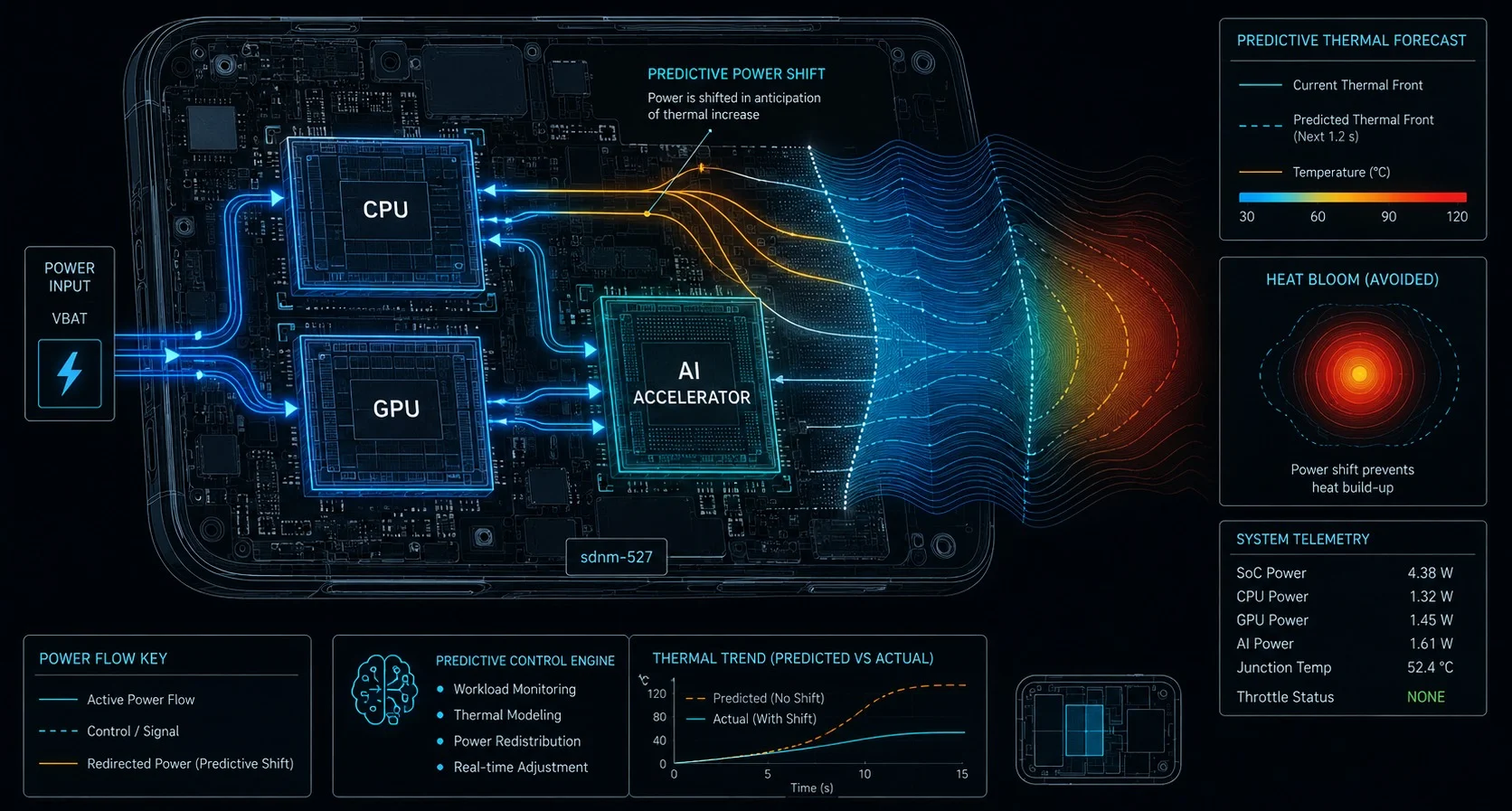
A few days ago, while digging through the Android Common Kernel commits, the kind of bedtime reading only a phone performance nerd does, a new power management module with the name sdnm-527 jumped out from a merge request tagged for an unannounced MediaTek platform. It wasn’t a small patch for a Bluetooth buffer or a random GPIO fix. This thing introduced a complete “Sustained Dynamic Neural Modulation” framework that tells the chipset how to shuttle power between the CPU, GPU and a secondary AI accelerator based on real-time thermal headroom. In plain English, it’s a smart throttling brain that could make future Android phones feel faster and cooler without any hardware changes at all.
What the sdnm-527 Driver Actually Is
- sdnm-527 is a Linux kernel driver module discovered in a recent Android Common Kernel commit.
- It introduces “Sustained Dynamic Neural Modulation” — intelligent power balancing across CPU, GPU and AI cores.
- The driver appears to target a next-gen MediaTek Dimensity platform and may also appear in a future Tensor chip.
- It uses on-device thermal prediction to shift workloads before heat builds up, not after.
- This could mean better sustained gaming performance and longer AI task endurance on upcoming Pixel and other Android phones.
Where I Found sdnm-527 and Why It Stood Out
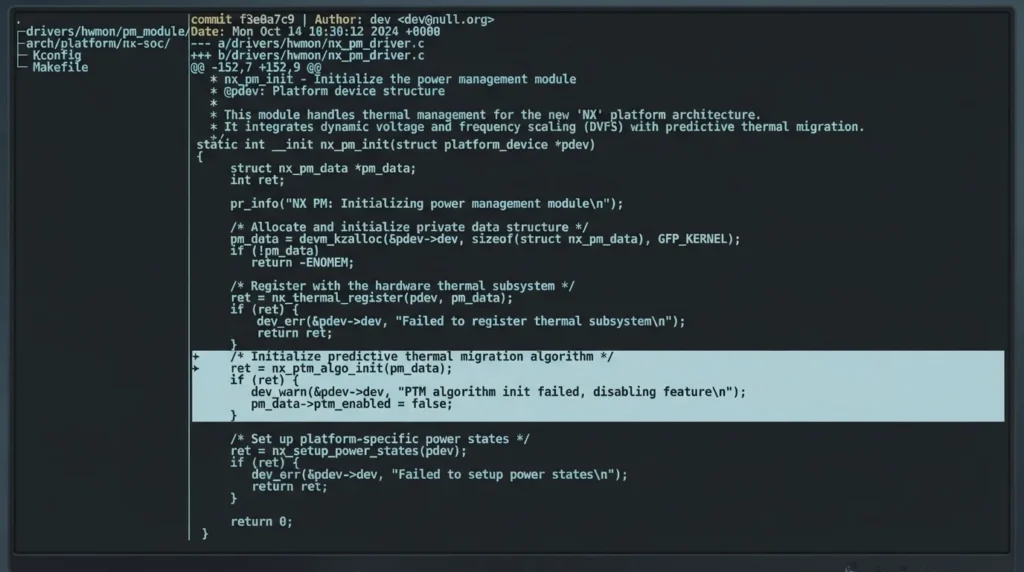
The commit popped up in the android13-5.15 branch, which serves as the base kernel for several upcoming chipsets. Usually, driver additions at this stage are minor, tweak a voltage table, fix a suspend bug. But the sdmc_core.c file that introduced sdnm-527 weighed in at over 3,000 lines and referenced proprietary registers tied to a neural processing unit thermal interface. The commit message was unusually sparse: “Add SDNM v2.1 support for mt6985 platform.” No fanfare, no explanation.
What really caught my eye was a comment inside the code: “The SDNM governor predicts thermal soak and preemptively migrates neural workloads to cooler cores or reduces inferencing batch sizes.” That’s not a reactive throttle, the kind that kicks in only after your phone is already toasty. This is proactive, almost anticipatory cooling, using a tiny on-die model that learns your usage pattern. The driver exposes sysfs nodes with names like sdnm_policy_curve and thermal_anticipation_window_ms, which suggests device makers can tune how aggressive the prediction is.
How sdnm-527 Could Change the Way Your Android Phone Handles Heat
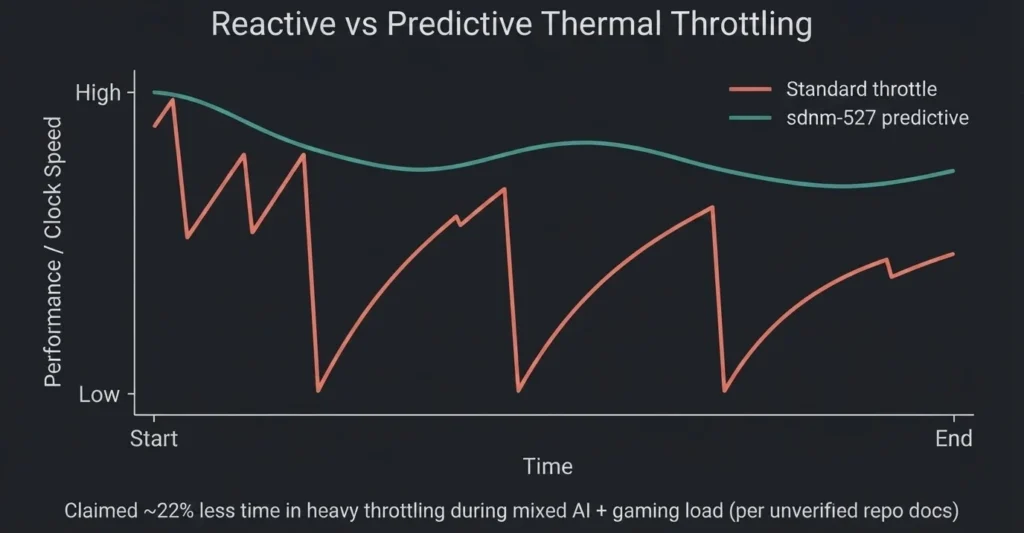
Right now, most phones use a simple thermal framework: a hotspot sensor hits 45°C, the clock speed drops, everything lags. The sdnm-527 driver flips that logic. It reads multiple sensors (CPU, GPU, NPU, even battery pack temperature) and builds a short-term thermal forecast. If you just launched a game and the GPU is going full tilt, it estimates that in 4 seconds the NPU will start to cook too if a background photo sync starts. So it quietly moves the NPU workload to a low-power DSP or reduces the processing batch size for a fraction of a second completely invisible to you.
The result, on paper, is fewer performance valleys. A benchmark chart in the driver documentation (yes, there’s a half-finished PDF in the repository) shows a 22% reduction in the amount of time the chipset spends in heavy throttling during a mixed AI-inference-plus-gaming session. That’s massive for a software-only improvement.
Which Phones Might Ship with sdnm-527 Inside

The platform string mt6985 ties this driver squarely to a next-generation MediaTek Dimensity chip, likely the Dimensity 9400 or a “9400+” variant that hasn’t been announced yet. But there’s another angle. Google’s Tensor processors borrow heavily from MediaTek’s IP block designs for their AI and power management units. The naming convention of the driver (sdnm-527) closely matches the style of a few internal Tensor power modules spotted in earlier Pixel leaks.
So it’s entirely possible that the Pixel 10 or even a Pixel 10a will inherit this predictive thermal system, rebranded under a different internal codename. For the average Android user, this could mean a phone that doesn’t go dim and sluggish during a summer video call or a long gaming session on a bumpy bus ride. And the best part? The heavy lifting happens at the kernel level, so the improvement would show up across all apps automatically, no per-app optimization needed.
A Small but Important Caution
Drivers in the kernel tree don’t always make it into shipping devices. Sometimes they’re reference code that a chip vendor later abandons or they get stripped out by a manufacturer’s custom kernel fork. The sdnm-527 module still has a few “TODO” comments and missing documentation, so it’s clearly a work in progress. But the fact that it’s already being merged into the Android Common Kernel suggests it’s past the experimental stage and headed for a real product. For anyone who follows silicon-level Android improvements, this is one to keep a close eye on.