 Rafael Weiss ( Androind Engineer )
Android handhelds have quietly become one of the most exciting corners of consumer tech. Whether you want to emulate classics, stream AAA titles, or play native Android games on a proper screen with real buttons — there’s a device for you, at almost every price point.
What Even Is an Android Portable Console?
Not a phone. Not quite a tablet. Something in between — but purpose-built for gaming.
Android handhelds look like a Nintendo Switch crossed with a Game Boy. Physical controls built in, a screen in the middle, Android running underneath. Because it’s Android, you get Google Play, cloud gaming apps, emulators, the works. The difference from your phone is that everything — the chip, the battery, the screen aspect ratio — is optimized for gaming specifically.
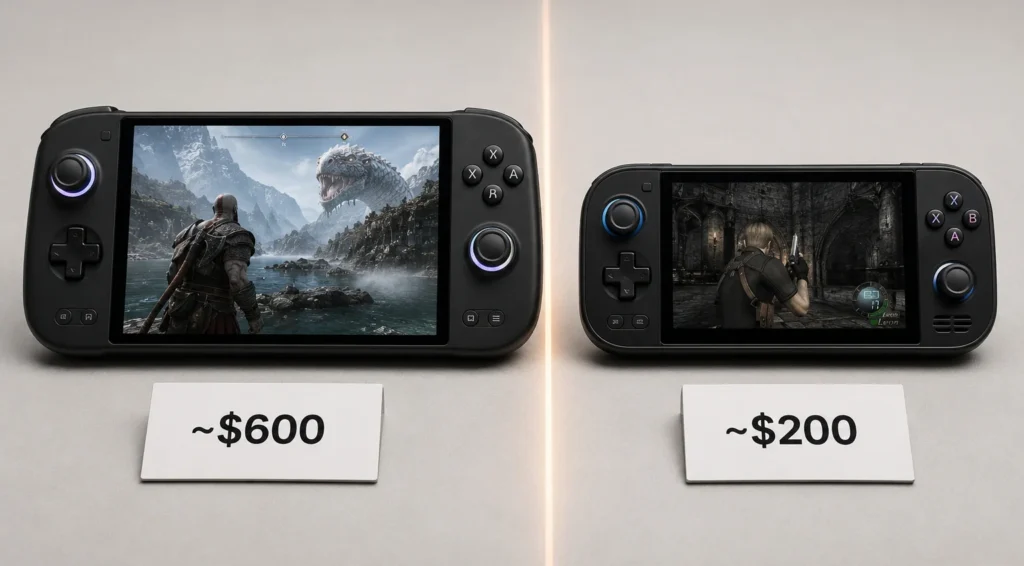
The market’s been growing fast. Brands like Retroid, AYANEO, Anbernic, and AYN have carved out serious followings, and newer names like MANGMI are coming in at sub-$100 price points that were unthinkable two years ago.
The Hardware — What’s Actually Out There in 2026
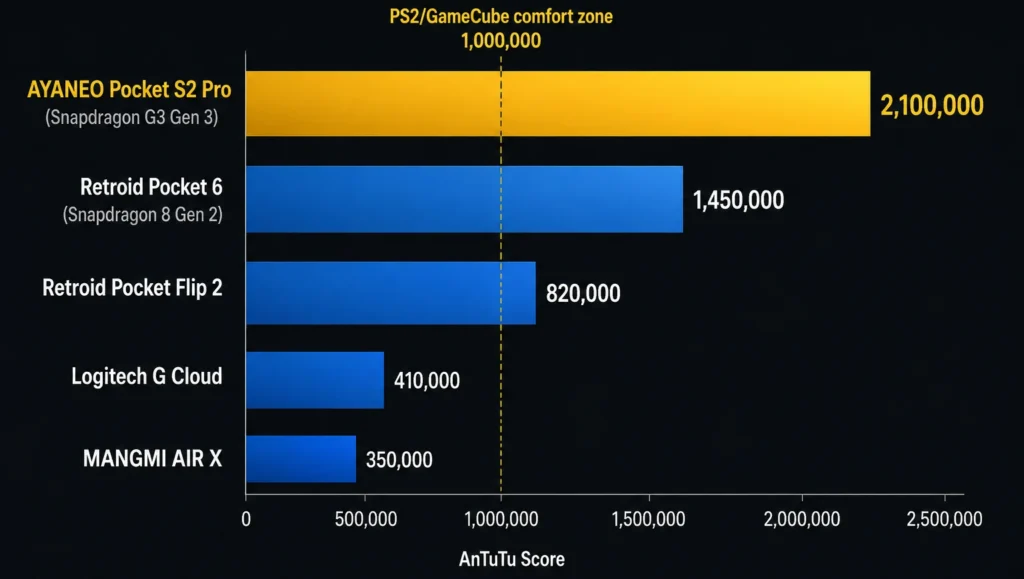
Here’s where it gets interesting. The chip situation has genuinely changed things. Qualcomm’s Snapdragon G3 Gen 3 — built specifically for gaming handhelds, not just repurposed from phones is now showing up in flagship devices like the AYANEO Pocket S2 Pro, and the performance jump is real.
| Device | Key Specs | Best For | Approx. Price |
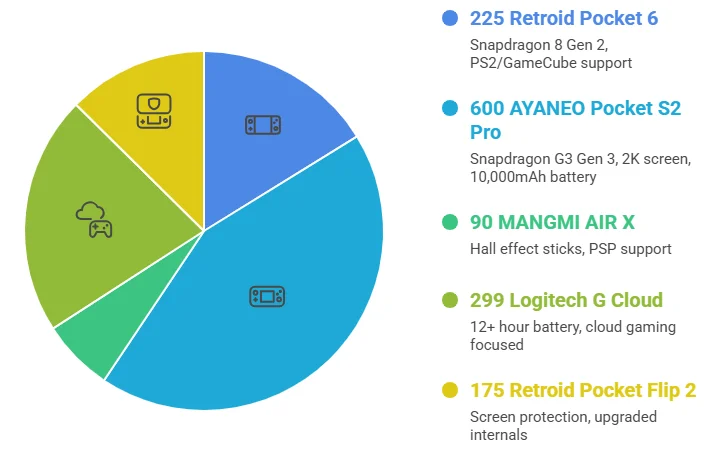
| AYANEO Pocket S2 Pro | Snapdragon G3 Gen 3, 6.3″ 2K IPS, 10,000mAh | Premium all-in-one emulation | ~$600 |
| Retroid Pocket 6 | Snapdragon 8 Gen 2, Android 13 | PS2/GameCube emulation | ~$200–$250 |
| Retroid Pocket Flip 2 | Clamshell, upgraded internals | Portability, screen protection | ~$150–$200 |
| MANGMI AIR X | 5.5″ FHD IPS, Hall effect sticks | Entry-level PSP and below | $89.99 |
| Logitech G Cloud | 7″ FHD, 12+ hr battery | Cloud gaming only | ~$299 |
The MANGMI AIR X at $89.99 deserves a mention beyond the table. Hall effect sticks at that price is genuinely unusual — those don’t drift the way standard potentiometer sticks do, which matters if you’re putting serious hours in.
On the wild end, OnePlus is experimenting with a snap-on controller for the Ace 6 Ultra — micro-mechanical switches, 1000Hz polling, magnetic cooling fan. It’s a smartphone that moonlights as a handheld. Weird, but interesting.
Emulation — The Real Reason People Buy These Things
Honest answer? Most people buying a dedicated Android handheld aren’t doing it for Google Play. They’re doing it for emulation. Running PS2 games on a device that fits in a jacket pocket, or finally playing through a GameCube library they never got to as a kid — that’s the pull.
And the current hardware makes it genuinely viable. The Retroid Pocket 6 handles PS2 and GameCube comfortably. The AYANEO Pocket S2 Pro pushes further. Even the budget MANGMI AIR X does PSP well, which covers an enormous chunk of what most people actually want.
Frontend apps are what make the experience feel cohesive rather than cobbled together:
- Daijisho — clean, highly customizable, pulls cover art automatically. Most people’s first recommendation.
- LaunchBox — more feature-rich, better for large libraries, slight learning curve
- Hori — simpler, good for beginners who don’t want to configure much
Screen ratio matters more than people expect. A 4:3 screen — like on the upcoming AYANEO Pocket S Mini — displays retro console games without black bars. The 16:9 screens on devices like the MANGMI AIR X are better for PSP, which was native widescreen.
One thing worth being direct about: ROMs must be legally obtained. Dumping games you own is the legitimate route. The emulators themselves are legal — it’s the ROMs where it gets complicated, and no guide should pretend otherwise.
Cloud Gaming — The Other Half of the Picture
Emulation gets the headlines but cloud gaming is quietly just as important, especially for people who want current-gen titles without current-gen hardware costs.
Three services do the heavy lifting:
- Xbox Cloud Gaming — part of Game Pass Ultimate, streams hundreds of titles. Works great on any of these devices over a solid WiFi connection. The Logitech G Cloud was practically designed around this use case.
- GeForce NOW — streams from your existing Steam or Epic library. If you’ve already bought PC games, this is huge.
- PS Remote Play — stream your PS5 to the handheld. Latency-dependent, but works well at home on 5GHz WiFi.
WiFi spec actually matters here. Devices with WiFi 6E or 7 will handle cloud streaming noticeably better than older standards, especially in congested networks.
Android vs. iPhone as a Console — Quick Version
Worth addressing because the question comes up constantly.
The iPhone + controller setup — particularly the Backbone One at around $100 — is genuinely good. Transforms an iPhone 15 or 16 into something resembling a Switch Lite. App Store emulators like Folium and EmuBox have improved a lot since Apple loosened its rules.
But there are real limits:
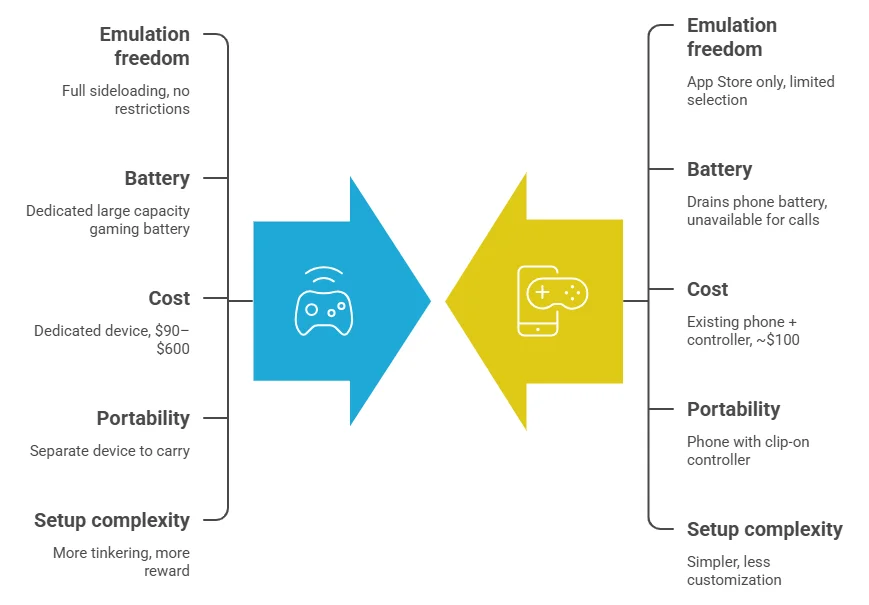
| Factor | Android Handheld | iPhone + Controller |
| Emulation freedom | Any APK, full sideloading | App Store only, no sideloading |
| Battery | Dedicated 4,000–10,000mAh | Drains your phone battery |
| Cost | $90–$600 for dedicated hardware | $0 if you own an iPhone + ~$100 controller |
| Portability | Second device to carry | Just your phone |
| Tinkering required | More setup, more reward | Simpler, more restricted |
iPhone wins on simplicity and cost-if-you-already-own-one. Android wins on everything emulation-related, battery longevity during sessions, and hardware variety. If you’re deep into retro gaming, there’s no real competition — Android is the answer. If you mostly want cloud gaming and Apple Arcade with occasional retro dips, the Backbone route is totally reasonable.
So, Which One Should You Actually Buy?
Depends entirely on what you’re trying to do. Not a cop-out — genuinely, the use case splits are pretty clean once you know them.
You want the best emulation experience, full stop: Go Retroid Pocket 6. Around $200–$250, Snapdragon 8 Gen 2, handles PS2 and GameCube without breaking a sweat. The community around Retroid specifically is massive — Reddit’s r/SBCGaming has setup guides, ROM organization tips, emulator configs, basically everything you’d need. You won’t hit a wall with this device for a long time.
You want premium and money isn’t the main concern: AYANEO Pocket S2 Pro. The Snapdragon G3 Gen 3 chip, the 10,000mAh battery, the 2K screen — it’s the closest thing to a definitive Android handheld right now. Detachable D-pad is a genuinely clever hardware decision too.
You’re testing the waters and don’t want to spend much: MANGMI AIR X at $89.99. Hall effect sticks, decent screen, handles everything up to PSP well. If you try it and love it, you’ll know exactly what to upgrade to next.
You mostly want cloud gaming: Logitech G Cloud. Built around streaming, 12+ hour battery, clean software experience. Doesn’t try to be an emulation powerhouse and is better for not trying.
Where This Market Is Going
A few things worth watching through the rest of 2026.
The line between smartphone and handheld is getting genuinely blurry. OnePlus snapping a controller onto a flagship phone with a 1000Hz polling rate isn’t a gimmick — it’s a real product direction. If that catches on, the dedicated handheld market could start competing with a very different kind of device.
Form factors are getting weird in interesting ways. Dual-screen handhelds like the Anbernic RG DS and ONEXSUGAR SUGAR 1, portrait-mode devices like the AYANEO Pocket Vert — manufacturers are clearly experimenting beyond the standard Switch-clone shape. Some of it won’t stick. Some of it will.
And emulation keeps getting better. The Dolphin emulator team, the RPCS3 contributors, the RetroArch ecosystem — these projects move fast, and hardware that feels like a ceiling today often isn’t one six months later.
Final Thought
Android handhelds aren’t for everyone. They require some setup, some patience, some willingness to poke around in settings. But if you’ve ever wanted a device that runs your entire gaming history — NES through PS2, with cloud access to whatever’s current — in something that fits in a coat pocket, there’s genuinely never been a better time to buy one.
The hardware is good. The software caught up. The prices, especially at the entry level, are hard to argue with.
Pick your use case from the table above and go from there. You probably won’t regret it.